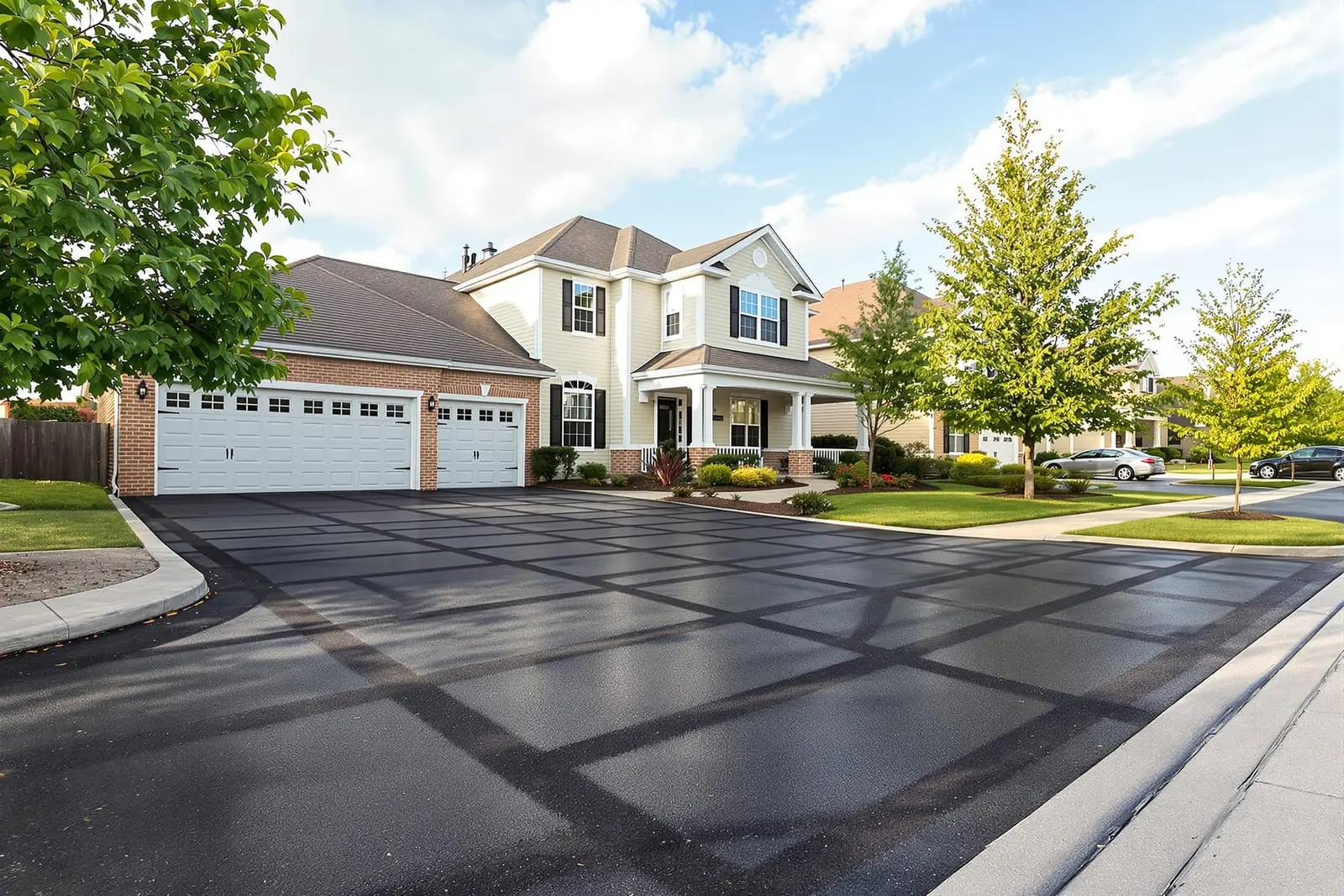
Support your community with reliable municipal paving in Houston, TX. We construct and resurface subdivision streets, access roads, and public facility lots with durable asphalt. Our crews follow strict specifications for thickness, compaction, and drainage. From small patch projects to multi phase roadway work, we coordinate closely with agencies and engineers.
Prestige Asphalt Houston provides professional municipal paving throughout Houston, TX and the surrounding area. Our licensed, insured crew delivers safe, clean, on-time work with a free estimate before anything begins. Call (346) 699-7789 or request your free quote.
Road, Street, and Municipal Paving in Houston
Municipal paving in Houston is different from paving a driveway or a small parking lot. You are dealing with heavy traffic loads, drainage requirements, ADA compliance, and coordination with city or county standards. Prestige Asphalt Houston focuses on road, street, and municipal paving projects that must perform in high heat, heavy rain, and continuous traffic.
Before any work starts, we review your project scope and jurisdictional requirements. That may include City of Houston, Harris County, or HOA guidelines, plus any engineering plans you already have. We verify design thickness, base specifications, curb and gutter details, and tie-in elevations at driveways and intersections. If you do not have stamped plans yet, we can work with your engineer or recommend one familiar with local standards.
For public roads and streets, traffic control and phasing are critical. We plan lane closures, flagging operations, and detours ahead of time so essential access is maintained for residents, schools, and emergency vehicles. Our crews understand how to sequence work to keep at least one lane open where possible and avoid cutting off neighborhoods or key drive aisles to businesses.
How Municipal Paving Projects Are Planned and Scheduled
The Houston climate affects how municipal paving should be scheduled. High heat, sudden thunderstorms, and hurricane season all impact production and mix performance. Prestige Asphalt Houston typically recommends major mill and overlay or full reconstruction work from October through May, when temperatures are still warm enough for compaction but daily highs are less extreme and storm frequency is lower.
Planning starts with a pavement assessment. We walk and drive the route, note cracking patterns, rutting, base failures, ponding areas, and existing patchwork. From there we decide whether your road needs a simple overlay, a mill and overlay, or full-depth reclamation or reconstruction. For many neighborhood streets, a 1.5 to 2 inch surface mill and a 2 inch overlay can extend service life without the cost of complete replacement. For busier collector or industrial routes, thicker structures or full-depth rehab may be needed.
Once scope is established, we set a schedule that accounts for school traffic, trash routes, and local events. For example, work near NRG Park or inside the Loop may be phased around game days or events to limit congestion. In residential subdivisions, we often rotate work by section so residents always have a paved access route in and out.
Materials, Thickness, and Design Options for Houston Roads and Streets
Municipal paving in Houston typically uses hot mix asphalt designed to handle both heat and load. Prestige Asphalt Houston works with local plants to specify mixes that match the expected traffic category, from light residential streets up to heavy truck routes that serve warehouses or industrial facilities. Mix designs may vary in aggregate size and binder content to balance skid resistance, durability, and smoothness.
For local residential streets, you might see structures such as a compacted subgrade, 6 to 8 inches of crushed limestone base, and 2 to 3 inches of asphalt surface. Collectors and busier streets often require thicker base and multi-lift asphalt (for example a 2 inch binder course plus a 1.5 inch surface course). Where truck traffic is heavy, we may recommend a stronger base material or stabilized subgrade to reduce rutting under repeated loads.
Drainage design is critical in Houston because of frequent intense storms. We set road crown and cross slope to move water to gutters or ditches quickly. In flat areas, even a small mistake in slope can create standing water that accelerates deterioration and becomes a safety issue. Our crews use automatic grade controls and frequent checks with laser levels to keep slopes consistent, especially near inlets and intersections.
We also consider surface treatments. In some municipal settings, a leveling course is used first to correct ruts and undulations, followed by a finer surface lift for ride quality. On streets that already have multiple overlays and high curb lines, we may mill deeper so the new surface matches existing gutter elevations and does not trap water next to the curb.
Step-by-Step: How Prestige Asphalt Houston Builds and Rebuilds Roads
The paving process for streets and municipal projects follows a series of steps that must be executed correctly to get long life out of your investment.
1) Investigation and layout: We confirm utilities, manholes, water valves, and any known underground issues. Every casting is marked and protected so it is not buried or damaged.
2) Demolition and milling: For rehab projects, we use a milling machine to remove a controlled depth of existing asphalt. This preserves curb and gutter elevations and removes surface cracking. On full reconstructions, we saw cut and remove existing pavement and, when necessary, the old base.
3) Subgrade and base preparation: We rework the subgrade, compact it to the required density, and install new base material where needed. In areas with soft or saturated soil, common in low-lying parts of Houston, we may undercut poor material and replace it with select fill or stabilized base to prevent future failures.
4) Fine grading and proof rolling: Before paving, the base is fine graded and proof rolled with a loaded truck or roller. Any areas that deflect or pump under load are corrected before asphalt is placed. This step is often skipped by low-end contractors, but it is essential for streets that need to carry buses and emergency equipment.
5) Asphalt placement and compaction: We place asphalt using a paver with automatic screed controls to achieve consistent thickness and slope. Rollers follow immediately with a specific compaction pattern for each lift. Timing is critical in Houston heat, since the mix cools quickly in winter and can become too soft in peak summer if not compacted properly.
6) Transitions and tie-ins: We carefully tie into existing surfaces at intersections, side streets, and driveways. Feathered transitions reduce bumps and trip hazards and avoid abrupt changes in grade that can catch lower vehicles.
7) Striping and final details: Once the surface cools, we install traffic markings, crosswalks, stop bars, and, where needed, thermoplastic symbols. Signage, wheel stops, and ADA ramps are checked against plans before final sign-off.
Common Problems in Houston Streets and How We Address Them
Houston roads and neighborhood streets have a few recurring issues that directly affect municipal paving decisions. Prestige Asphalt Houston focuses on fixing the cause, not just the symptom.
Potholes and alligator cracking usually signal base or subgrade failure, not just surface wear. Simply patching the top will not hold. We cut out failed sections, correct moisture or base problems, then rebuild from the bottom up. In areas with repeated utility cuts, we may recommend a larger panel replacement rather than a scatter of small patches so the ride quality and performance are more uniform.
Rutting and shoving at intersections and bus stops happen when mixes are underdesigned for the load or when the base is not strong enough. For these locations, we often specify a stiffer mix, thicker binder course, or even a different base detail under the wheel paths. On steep approaches to stop signs or signals, we adjust joint locations so braking forces are not concentrated on cold joints.
Drainage failures and ponding show up quickly during our frequent storms. We evaluate not only the pavement surface but also inlets, ditches, and culverts that may be restricting flow. Sometimes a modest increase in cross slope or a localized mill and fill around a low inlet is enough to eliminate standing water without full street reconstruction. Other times, curb and gutter settlement requires more extensive correction.
Reflective cracking from underlying concrete or older asphalt layers can be managed with interlayers or fabric membranes on certain projects. We consider traffic levels, expected movement, and budget before recommending these options so owners understand the cost versus benefit.
Cost Drivers, Bidding, and What to Ask Before You Hire
Municipal paving cost in Houston is driven by more than just asphalt price per ton. The main factors are project size, required pavement thickness, base repairs, traffic control complexity, and the amount of milling or reconstruction involved. Work in tight urban corridors with heavy traffic and many driveways often costs more than work on straight, open stretches because production is slower and traffic control is more intensive.
Prestige Asphalt Houston provides itemized proposals that separate milling, base work, asphalt tonnage, striping, and traffic control. This helps you compare bids accurately instead of guessing why prices are different. For example, one contractor may price only a thin overlay, while another has included full-depth patching for obvious failures. On a short timeline you may not want to risk going with the bare minimum.
Before you select a paving contractor for road, street, or municipal work, ask for recent projects of similar scope in the Houston area, including contact information for references. Confirm their experience with local specifications and whether they carry the insurance levels typically required by public entities or larger HOAs. Also ask how they will maintain access for residents, emergency vehicles, and trash collection while work is under way.
Finally, verify that your contractor is prepared for Houston weather realities. Sudden afternoon storms can wash out fresh work if the crew does not monitor radar and stage operations properly. A qualified municipal paving contractor will have clear criteria for when to stop paving, how to protect unfinished lanes, and how to resume without creating weak construction joints.
“
Professional road, street, and municipal paving, done right the first time, quality materials, honest pricing, and results that last.
Prestige Asphalt Houston
Road, Street, and Municipal Paving Across Our Service Area