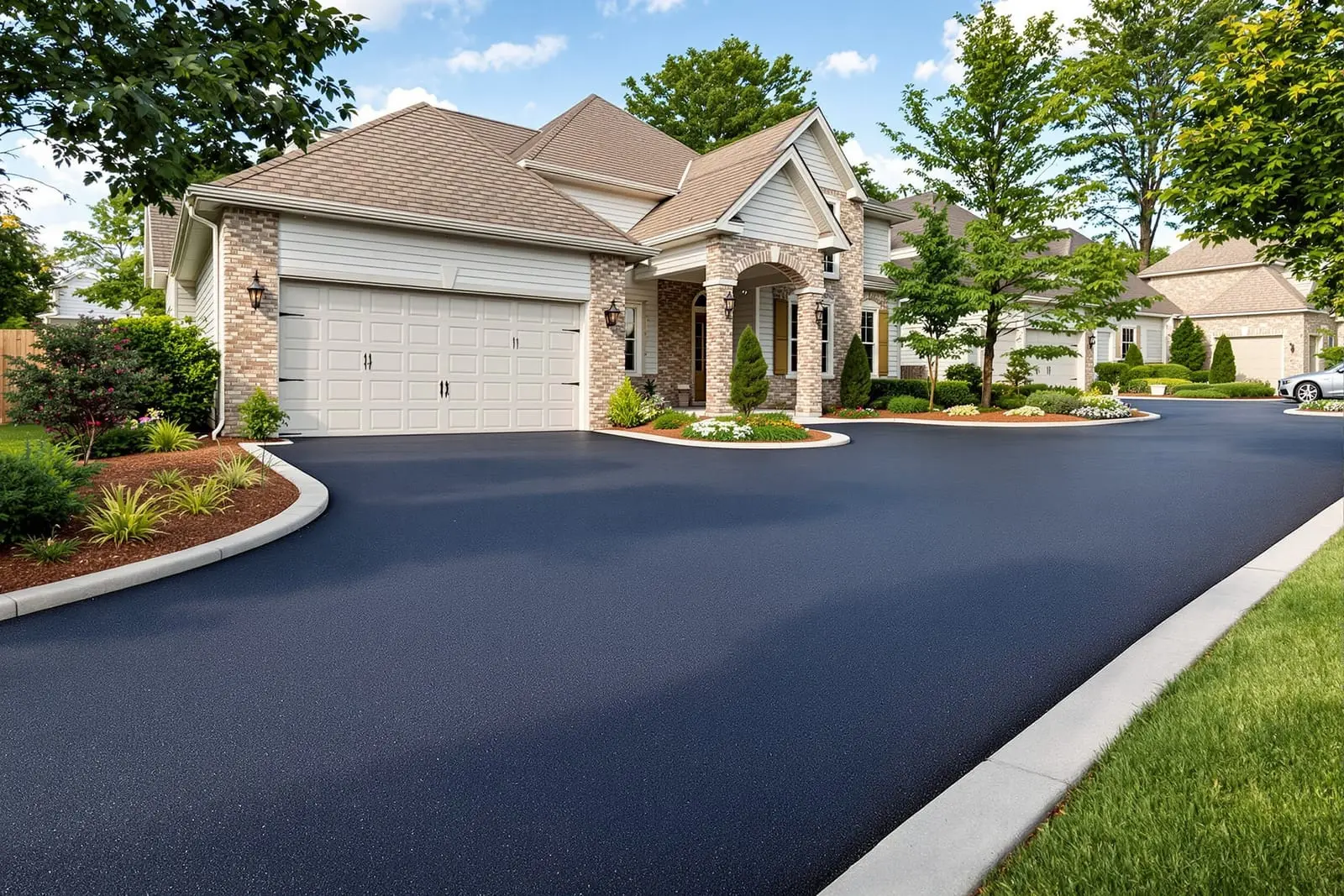
Handle trucks, forklifts, and constant loading with industrial asphalt paving in Houston, TX. We design heavy duty pavement sections for distribution centers, manufacturing plants, container yards, and loading docks. Thicker asphalt, strong base layers, and proper reinforcement help resist rutting and failure. Our team can evaluate traffic loads and recommend the right pavement structure.
Prestige Asphalt Houston provides professional industrial asphalt paving throughout Houston, TX and the surrounding area. Our licensed, insured crew delivers safe, clean, on-time work with a free estimate before anything begins. Call (346) 699-7789 or request your free quote.
Industrial Asphalt Paving Built for Houston Workloads
Industrial asphalt paving is very different from paving a neighborhood driveway. At facilities across Houston, asphalt has to stand up to loaded 18-wheelers, forklifts turning in tight spots, heavy equipment, and chemical spills. Prestige Asphalt Houston designs and builds heavy-duty asphalt systems specifically for refineries, distribution centers, plants, ports, and industrial parks in our climate and soil conditions.
Our approach starts with how your site actually operates. We walk the property with you, map out traffic flows, turning radiuses, loading and unloading areas, and where trucks tend to queue. We ask about axle loads, number of trips per day, and what type of equipment is used. That information shapes the pavement section we recommend, including base depth, asphalt thickness, and mix type, so you are not overpaying for unneeded thickness or underbuilding a surface that will rut within a few summers.
Because we work only in the greater Houston area, our crews are experienced with local issues like expansive clay soils, drainage challenges from sudden thunderstorms, and the pounding heat that softens poorly designed asphalt. When Prestige Asphalt Houston proposes an industrial asphalt paving solution, it is tailored to our region, not copied from a generic spec book.
Site Evaluation, Soil Conditions, and Drainage Planning
For industrial asphalt paving, what is under the black surface matters more than what you see on top. Our team begins with a detailed site evaluation: soil type, existing base or concrete, drainage patterns, and elevations. Houston has a lot of gumbo clay, which can swell when wet and shrink when dry. If this is not accounted for, you can end up with uneven pavements, reflective cracking, and ponding water.
Prestige Asphalt Houston often recommends proof-rolling the subgrade with a loaded truck or roller to find soft spots before paving. Any areas that deflect too much are undercut and replaced with compacted, crushed limestone or recycled concrete base. For industrial pavement, we usually specify a thicker base layer than you would ever see in residential work, commonly 6 to 12 inches depending on loads and subsoil.
Drainage design is just as critical in our Gulf Coast weather. Heavy storm bursts can overwhelm undersized inlets and flat grades. We set slopes to move water toward drains or swales, avoid birdbaths, and, when needed, coordinate with civil engineers to revise grades. Proper drainage improves safety for your crews and truck drivers, reduces hydroplaning, and greatly extends pavement life by keeping water out of the base.
Heavy-Duty Asphalt Mix Designs and Layer Thickness
Industrial asphalt paving in Houston should not rely on the same mix used on a small parking lot. At Prestige Asphalt Houston, we work with local asphalt plants to specify heavy-duty mixes suited for high loads and high temperatures. Common choices include mixes with higher stone content and polymer-modified binders that resist rutting and shoving in truck lanes and loading bays.
A typical heavy-duty section might use a coarse, rut-resistant surface course over a strong binder course, both placed over a thick, well-compacted base. For example, a truck court might receive 2 to 3 inches of surface mix over 3 to 4 inches of binder mix, on top of 8 inches or more of crushed base. The exact design depends on anticipated traffic and soil conditions. High-traffic transfer stations or port facilities may require even thicker asphalt or a full-depth asphalt design with no granular base.
During construction we monitor mix temperature and laydown procedures carefully, because improper compaction or cold joints create weak points that will show up as early cracks and depressions. We stage the paving so heavily loaded trucks travel over fully cooled and compacted asphalt, not fresh material that can shove or deform.
Industrial Paving Process from Demolition to Striping
Prestige Asphalt Houston manages industrial asphalt paving as a structured, sequenced process that is mindful of your operations and safety policies.
1. Planning and phasing: We coordinate with your facility managers and safety officers to build a phasing plan. We identify which truck lanes, docks, or tank areas must remain open and when. Many industrial clients in Houston prefer off-peak, night, or weekend work so we schedule crews and trucks accordingly.
2. Demolition and milling: Existing asphalt may be milled to a controlled depth, or full-depth removed if the base is failing. Old material is trucked to local recycling facilities where it is processed into RAP (reclaimed asphalt pavement) for reuse in future mixes.
3. Subgrade and base work: We repair undercut areas, regrade the base, and compact with vibratory rollers. On heavy-duty projects we often perform density tests to confirm compaction, especially under truck lanes and loading pads.
4. Asphalt placement: Asphalt is placed in lifts, typically no more than 2 to 3 inches compacted thickness at a time, to allow proper density. We use pavers with automatic grade control to maintain smooth slopes and transitions to existing slabs or rails.
5. Compaction and cooling: Steel drum and pneumatic rollers compact the asphalt while it is at the right temperature range. We protect the new surface from traffic until it cools sufficiently to handle heavy loads without marking.
6. Markings and safety features: Once cured, we add striping, truck lane markings, dock number stencils, and, if requested, bollards, wheel stops, and high-friction surfacing in pedestrian or forklift conflict zones.
Cost Drivers and Budget Planning for Heavy-Duty Pavement
Industrial asphalt paving is a significant capital investment, but a well-designed section often costs less over 20 years than repeated patchwork. Prestige Asphalt Houston is straightforward about what drives costs so you can plan and compare proposals accurately.
Major cost factors include: thickness and type of base, total asphalt tonnage, mix type (standard versus polymer-modified), demolition and haul-off requirements, drainage improvements, and site access. For example, if trucks can only enter during short overnight windows, or if we must work around sensitive equipment lines, production slows and the project duration increases.
Another major driver in Houston is subgrade condition. A site with stable, well-drained soil and an existing sound base may only need milling and overlay. A site with pumping mud or chronic standing water might require substantial undercut, geotextiles, or stabilization, which adds to cost but prevents far more expensive failures later.
We often help clients phase projects over multiple budget years. For example, in year one we may focus on primary truck lanes and dock aprons that are critical to operations. In year two we address trailer storage yards and overflow parking. By prioritizing the areas with the highest structural demand and safety impact, you get the most value from each paving dollar.
Common Industrial Pavement Problems and How We Prevent Them
When industrial asphalt paving is not designed or built for heavy-duty use, problems show up quickly. In Houston facilities we frequently see rutting in wheel paths, shoving at stop points near docks, alligator cracking where base has failed, and edge breakdown where trucks cut corners.
Prestige Asphalt Houston prevents these issues through a combination of design and construction practices. To fight rutting and shoving, we specify stiffer mixes and thicker asphalt in heavy braking and turning areas. Where truck tires repeatedly track over the same narrow strip, such as at entry gates or scale approaches, we sometimes widen or reinforce that zone with thicker asphalt or partial concrete tie-ins.
Base failures and alligator cracking are often linked to water and soft subgrade. We use proof-rolling to identify weak areas before paving, improve drainage grading, and may recommend underdrains if chronic groundwater is a concern. To protect edges, we design wider paved shoulders in truck paths, instead of letting tires run close to the edge where support is weakest.
For existing industrial pavements already in trouble, we offer milling and strengthening overlays, localized reconstruction, and drainage corrections. Our goal is not just to patch symptoms, but to address root causes so you can rely on your pavement in Houston heat and storms.
Why Local Experience Matters and How to Get a Quote
Industrial asphalt paving is not a commodity service. Success depends on understanding how your facility operates and how Houston weather and soils will affect the pavement over time. As a local contractor, Prestige Asphalt Houston is familiar with Harris County codes, nearby asphalt plants, and the logistical realities of working around refineries, terminals, and plants.
We are used to TWIC, ISNetworld, and various refinery and plant safety requirements, so we can often integrate smoothly with your existing safety and security processes. Before any paving begins, we confirm access routes, laydown areas for materials, and emergency egress so your operations remain safe and compliant.
If you are planning new construction, an expansion, or replacement of failing industrial pavement, we can review your drawings, conduct a site walk, and provide a written proposal that clearly outlines the pavement section, phasing, and estimated schedule. For facilities that cannot shut down, we focus on creative staging and off-hour work so your loading, manufacturing, and shipping stay on track.
Contact Prestige Asphalt Houston to schedule an on-site evaluation. We will help you determine whether full-depth reconstruction, milling and overlay, or targeted heavy-duty upgrades make the most sense for your industrial site in the Houston area.
“
Professional industrial and heavy-duty asphalt paving, done right the first time, quality materials, honest pricing, and results that last.
Prestige Asphalt Houston
Industrial and Heavy-Duty Asphalt Paving Across Our Service Area